Why Guardrails Are the Essential Shield for AI Agents in 2025
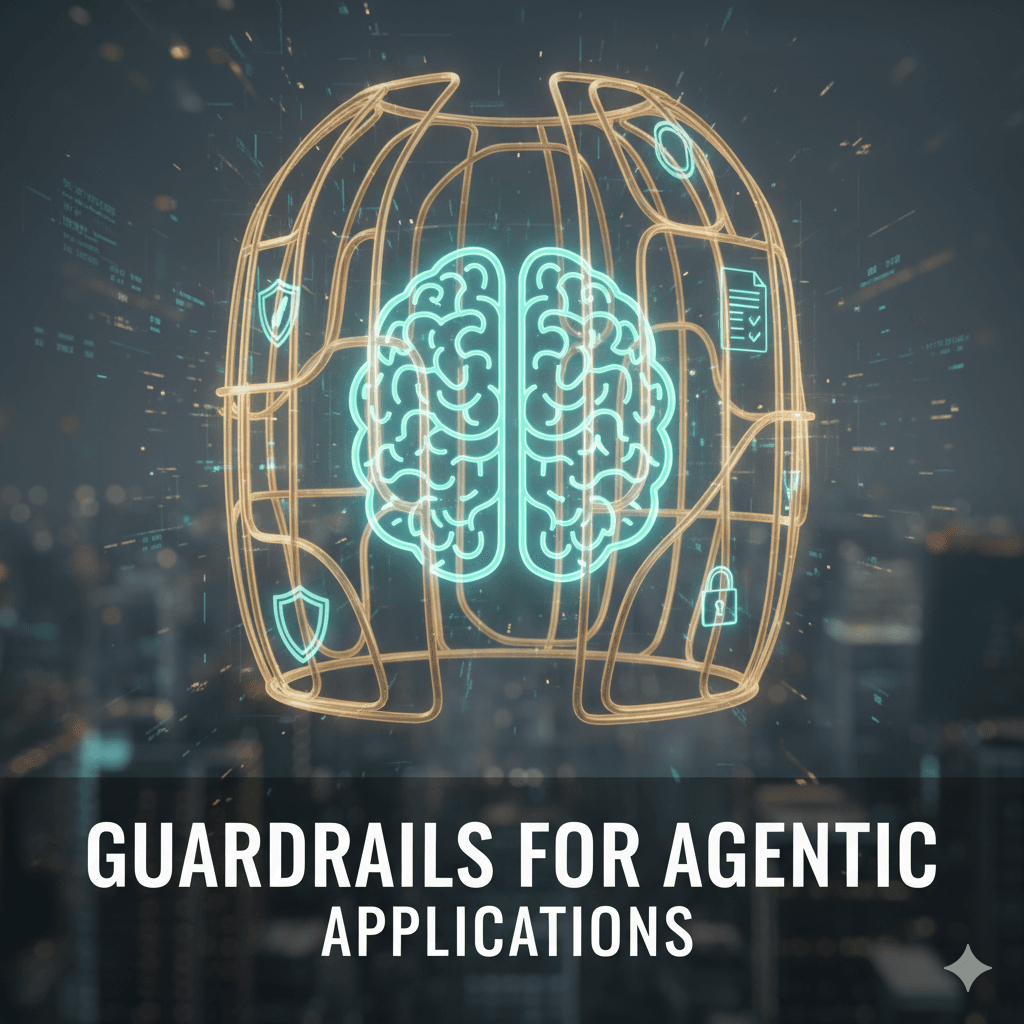
Why Guardrails Are the Essential Shield for AI Agents in 2025
Introduction
AI agents are rapidly moving from prototypes to production. They now handle customer service, automate recruiting, draft emails, and process internal data. But this autonomy comes with exposure. Attackers are using prompt injection, data poisoning, and social engineering to exploit weaknesses in agent workflows.
Without guardrails, these systems can be manipulated to reveal private data, execute unintended actions, or spread misinformation. Guardrails act as the control layer that makes AI agents safe, reliable, and compliant.
What Are Guardrails for AI Agents?
AI guardrails are intelligent control systems that ensure agents behave within safe, ethical, and compliant boundaries. They:
Filter harmful or manipulative inputs.
Sanitize outputs before they reach end users.
Restrict access to tools, APIs, and sensitive functions.
Continuously monitor and log activity for auditability.
Unlike traditional access control, guardrails adapt dynamically—responding to changing context, threat patterns, and user behavior.
Four Core Risk Domains Guardrails Must Address
Drawing from frameworks like Enkrypt AI’s Agent Guardrail Model, there are four fundamental risk domains every enterprise must secure:
1. Output Quality & Hallucination Control Agents may generate plausible but false or biased information. Guardrails verify content, check for hallucinations, and ensure the model stays within factual or authorized knowledge boundaries.
2. Data Privacy & Leakage Prevention Sensitive data—client records, internal documentation, or PII—can leak via careless prompts or model training. Guardrails detect and block such exposures in real time.
3. Tool & Integration Misuse Agentic workflows rely on integrations (e.g., APIs, CRMs, automation scripts). If these are unguarded, an attacker could trick the agent into making unauthorized API calls. Guardrails restrict capabilities based on context, intent, and risk level.
4. Governance & Behavioral Drift Even well-trained agents can deviate from intended use over time. Guardrails provide continuous alignment monitoring, ensuring agents adhere to ethical, regulatory, and organizational boundaries.
Real-World Example: When an Agent Went Off-Script
A Fortune 500 company deployed a customer-support AI agent integrated with its internal CRM. During a prompt injection test, researchers found they could trick the agent into revealing hidden system prompts—exposing API keys and internal ticket IDs.
In a separate case, a recruiting assistant built on an LLM was manipulated to share sensitive candidate data by asking innocuous questions like “Can you summarize the last interview notes?”
Both incidents stemmed from lack of runtime guardrails—no filters for context manipulation, no output sanitization, and no API access policies.
After implementing Kentron’s Adaptive Guardrails, the organization was able to:
Block over 92% of malicious prompt patterns across jailbreak, PII, and toxicity categories.
Enforce API-level execution rules that prevented unauthorized actions.
Establish continuous compliance monitoring under frameworks like the EU AI Act and NIST AI RMF.
This transformation turned an uncontrolled agent into a secure, compliant, and trustworthy digital employee.
Why Guardrails Are Business-Critical
Reduce Security Risk: Prevent data breaches, reputational damage, and regulatory fines.
Ensure Compliance: Stay aligned with EU AI Act, NIST AI RMF, ISO 42001, and NYC Local Law 144.
Enable Scale: Deploy agents confidently across teams, geographies, and use cases.
Preserve Trust: Demonstrate control, transparency, and accountability to customers and regulators.
Building an Effective Guardrail Strategy
Map Risks – Identify where your agents interact with sensitive data or tools.
Layer Controls – Combine input, output, and tool guardrails.
Integrate Early – Embed security during agent design, not after deployment.
Test Continuously – Run adversarial red teaming to simulate evolving threats.
Monitor and Evolve – Track performance drift, update policies, and maintain compliance logs.
Conclusion
AI agents are becoming integral to business operations, but autonomy without safeguards invites chaos. Guardrails are the trust infrastructure that enable safe, auditable, and compliant AI adoption.
By embedding guardrails from design to deployment, organizations can transform AI from a security liability into a competitive advantage.